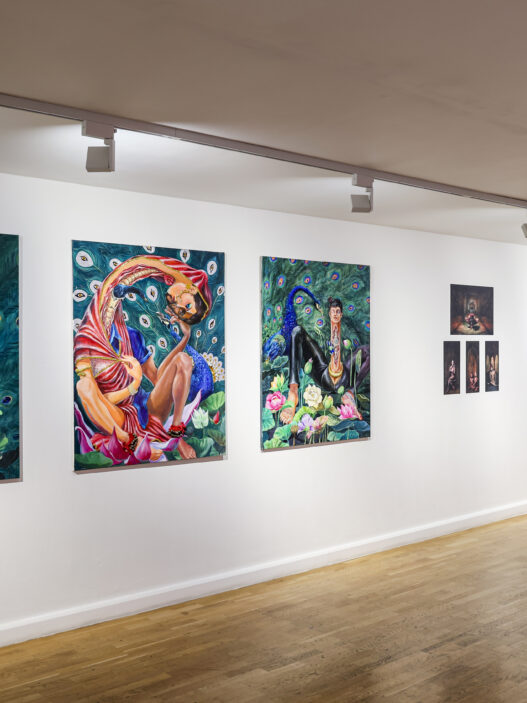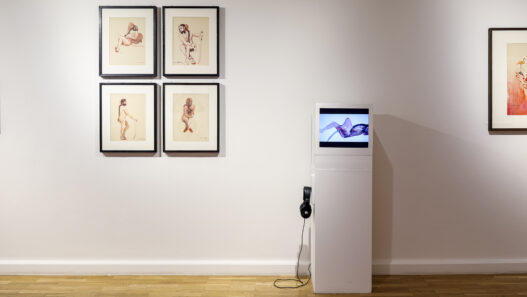

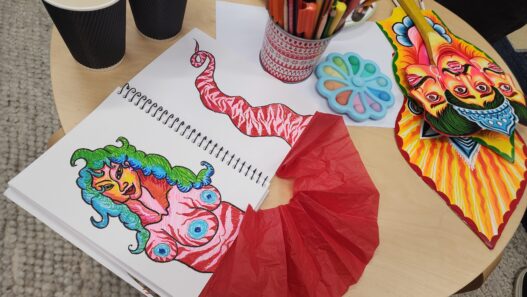
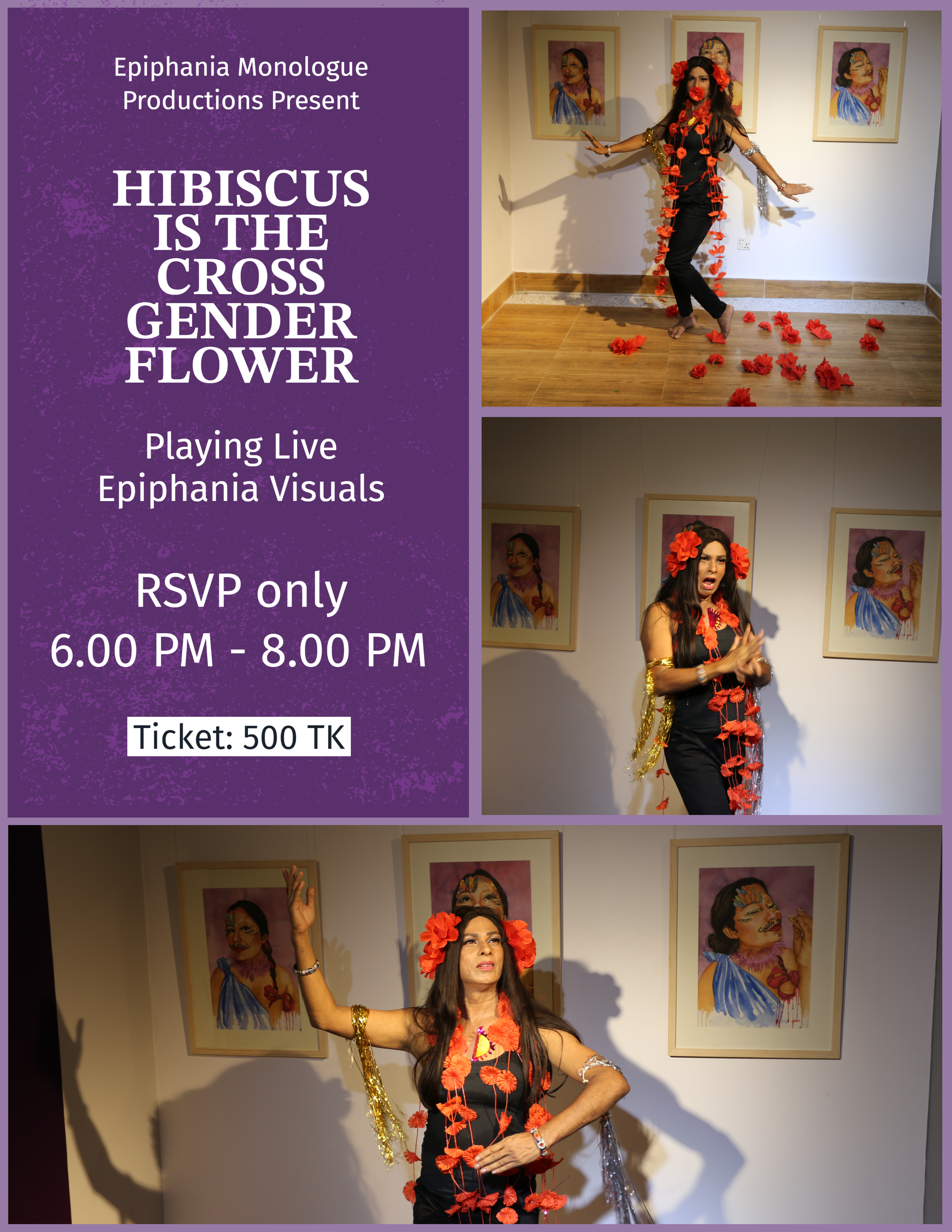


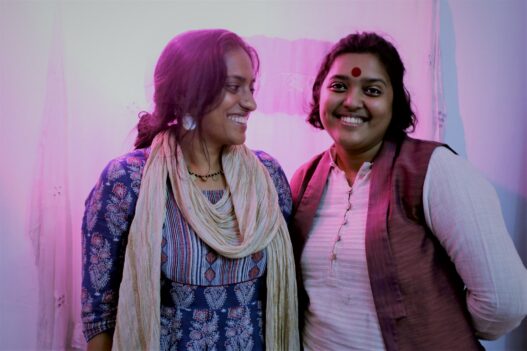
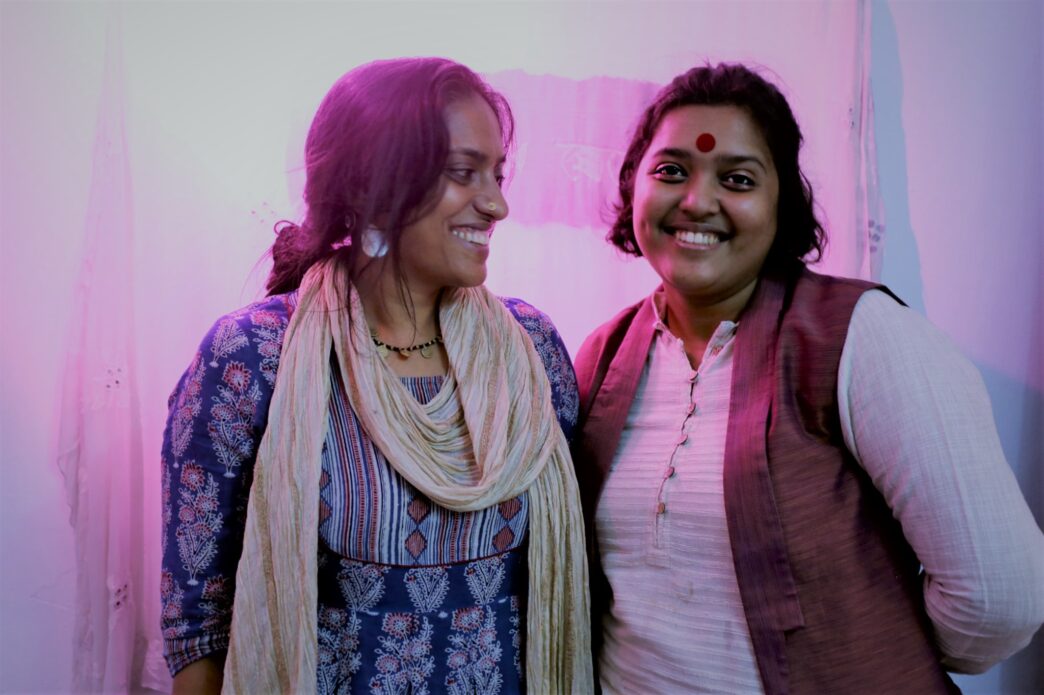
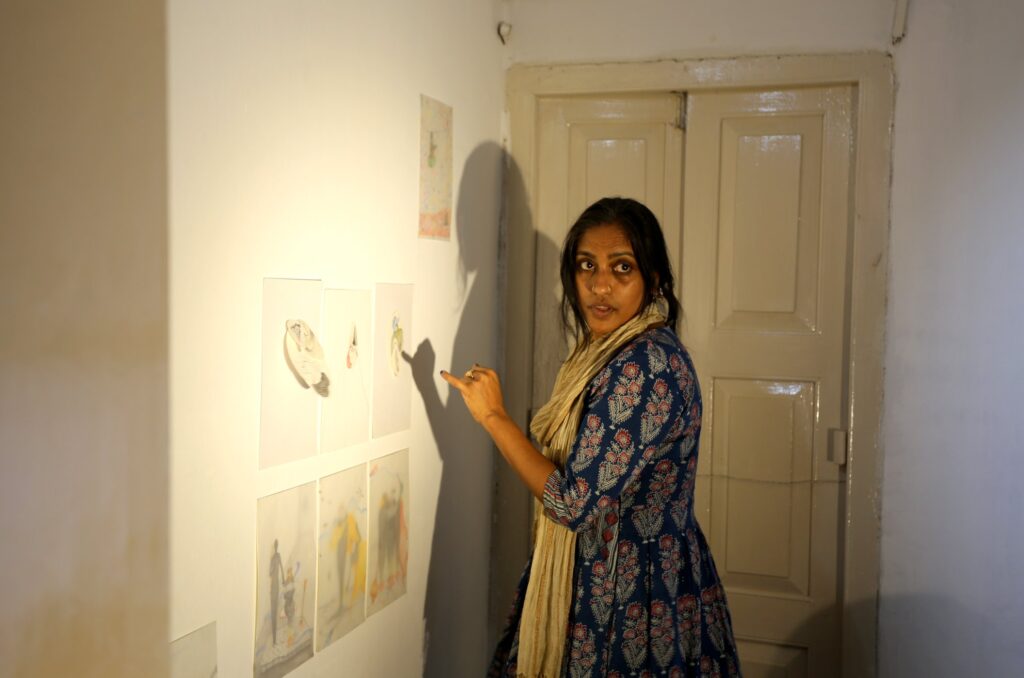
When internationally acclaimed, US-based Queer South Asian artist Chitra Ganesh visited Bangladesh and spent time with our team at Epiphania Visuals, she left an indelible mark that continues to resonate through our collective practice. Known globally for her expansive, narrative-driven work that seamlessly blends mythology, queer futurity, and comic book aesthetics, Chitra brought far more than her artistic prestige to our space—she brought a rare, transformative human presence.
Born in Brooklyn, New York, to South Indian immigrants, Chitra Ganesh has established herself as a vital voice in contemporary American art. Operating at the intersections of queer theory, diaspora studies, and feminist intervention, Ganesh’s multidisciplinary practice spans digital graphics, mural-scale installations, drawing, and painting (Noor, 2013).
Chitra Ganesh work is celebrated for its radical subversion of traditional epics, hegemonic religious iconographies, and popular visual culture (Mani, 2018; Noor, 2013). By dismantling established mythologies, Ganesh constructs what prominent queer theorist Gayatri Gopinath calls a “shared queer visual aesthetic”—an alternative archive where queer, female, brown bodies refuse to be erased or contained (Gopinath, 2011; Shirinian, 2021).
1. The Subversion of ‘Amar Chitra Katha‘
One of Ganesh’s most celebrated and enduring critical interventions is her dialogue with the mass-market Indian comic book series, Amar Chitra Katha (ACK). Launched in the late 1960s, ACK comic books served as a primary vehicle for disseminating Hindu mythology, historical narratives, and rigid moral frameworks across India and its global diaspora (Noor, 2013).
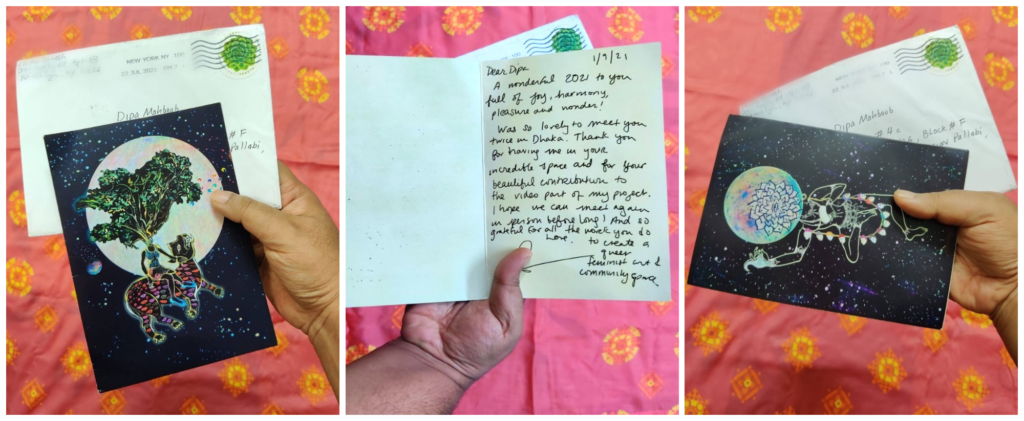
A Love From Chitra Ganesh
[Traditional Heuristic ACK Narrative]
       │ (Enforces: Chaste Femininity, Heteronormativity, Paternal Authority)
       ▼
[Ganesh's "De-Reconstruction" Intervention]
       │ (Strategies: Disjunctive Text, Collaged Bodies, Graphic Excess)
       ▼
[The Queer/Abject Archive]
         (Centers: Fluid Subjectivities, Same-Sex Desire, Sovereign Devotional Power)
Ganesh utilizes comic and zine aesthetics because they offer a familiar visual entryway into fundamentally “disjunctive tales” (Noor, 2013). Rather than keeping text and image in harmony, she deliberately privileges their dissonance. In seminal works like Tales of Amnesia (2002–2007), she cuts away the speech bubbles of traditional comic panels and populates them with surreal, cryptic text (Noor, 2013). This strategy disrupts the original moralizing undertones that demanded chaste, self-sacrificing behavior from women, replacing them with expressions of raw desire, loss, and psychological interiority (Noor, 2013).
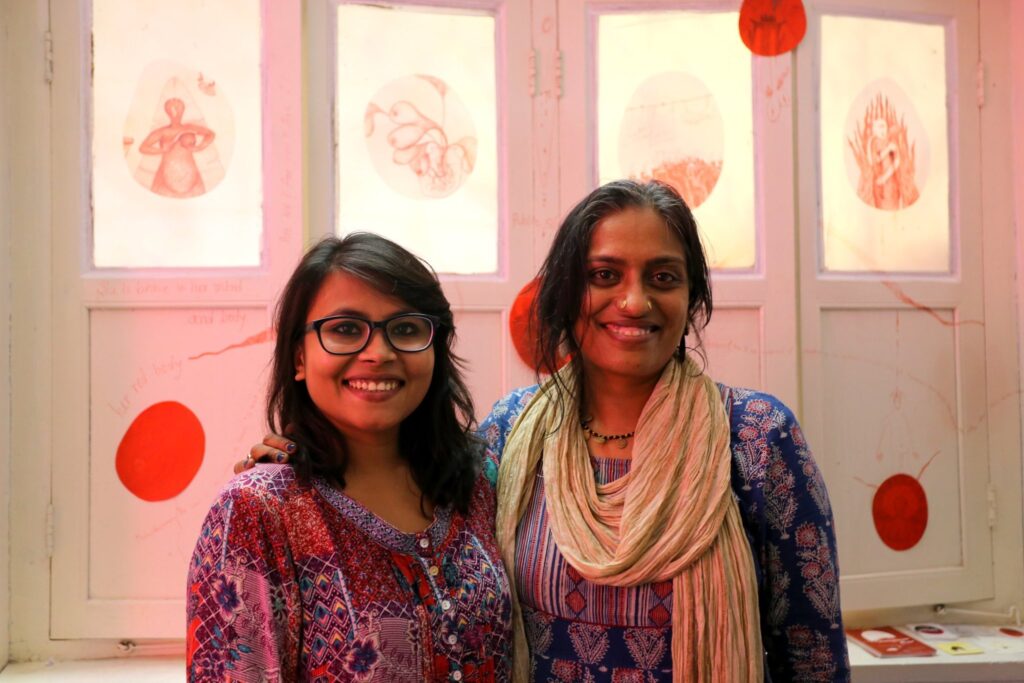
2. Theoretical Frameworks: Femininity, Myth, and Abjection
To understand the political weight of Ganesh’s figures, art historians frequently apply French philosopher Julia Kristeva’s concept of abjection—the psychic state of confronting that which is cast out, boundary-blurring, or structurally “unclean” (Noor, 2013).
While patriarchal and colonial frameworks often relegate female, queer, and brown subjectivities to the realm of the abject, Ganesh actively embraces this space. Her characters are rarely passive or unblemished; instead, they are surreal, monstrous amalgamations:
- The Fractured Deified Body: Figures are frequently drawn with exposed musculature, bleeding gashes, or multiple limbs reminiscent of the wrathful Hindu deities Kali and Durga (Noor, 2013; Phillips, 2025).
- The Corpse and the Crypt: Symbols of mortality—such as detachment of limbs, floating internal organs, and crowns of skulls—abound in her visual vocabulary (Noor, 2013).
By rendering these graphic and visceral states, Ganesh ensures that the brown female body breaks away from the male gaze. The “gash” in her protagonists’ bodies becomes a literal and metaphoric site of birth, transformation, and ultimate self-realization outside of patriarchal containment (Noor, 2013).
3. The Queer Diasporic Archive
Within Asian American visual studies, Ganesh’s oeuvre is recognized for remapping geographic divides (Mani, 2018). Her perspective is uniquely shaped by growing up in a multiracial urban environment in Brooklyn while maintaining deep ties to her ancestral South India (Gopinath, 2011; Phillips, 2025). Her art collapses timelines and spaces, intertwining:
| Visual/Historical Spheres Combined by Chitra Ganesh |
| Traditional South Asian Artistry: 18th-century Mughal miniature techniques and classic temple iconography (Mani, 2018; Phillips, 2025). |
| Western Pop Culture & Sci-Fi: 1960s/70s vintage comic aesthetics, psychedelic surrealism, and retro speculative fiction (Mani, 2018; Noor, 2013). |
| Transnational Geopolitics: Contemporary signifiers of global capitalism, state violence, and imperial border dynamics (Gopinath, 2011; Mani, 2018). |
This temporal collision functions as a critique of historical erasure (Gopinath, 2011). Because mainstream Western archives routinely ignore queer diasporic narratives, and traditional nationalist archives demand heteronormative conformity, Ganesh uses her canvas to fabricate her own records (Gopinath, 2011; Shirinian, 2021). Her portraits forge a model of affiliation based on shared histories of displacement, cross-racial alignment, and deep affective longing rather than biological kinship or strict state borders (Gopinath, 2011).
Speculative Futures
Ultimately, Chitra Ganesh’s practice is less about looking backward with nostalgia and more about mobilizing ancient iconographies to project queer, speculative futures (Gopinath, 2011; Mani, 2018). By populating the landscapes of science fiction and mythological epics with bold, sovereign queer brown subjects, she challenges the systemic erasures of the past. Her art serves as an essential visual testament to how marginalized communities survive, rewrite their own histories, and assert their presence in the world.
"Her visit was less of a formal exhibition and more of a shared artistic sanctuary, bridging New York's contemporary avant-garde with the raw creative energy of Bangladesh."
A Mesmerizing Afterglow
The lasting feeling Chitra left among the Epiphania Visuals team is nothing short of mesmerizing. It is rare to encounter an artist whose personal warmth completely mirrors the boldness of their art. Her visit served as a reminder that the most powerful art is born from deep empathy, rigorous collaboration, and a refusal to lose touch with the ground beneath our feet.
She arrived as an esteemed guest, but left as a foundational part of our artistic family—leaving behind a renewed fire to create, to speak truth, and to build worlds that burn, rebirth, and shout.
References
Gopinath, G. (2011). Archive, affect, and the everyday: Queer diasporic visual culture. Venu, 1-15.
Cited by: 4
Mani, B. (2018). South Asian American visual culture and representation. Oxford Research Encyclopedia of Literature. https://doi.org/10.1093/acrefore/9780190201098.013.899
Cited by: 1
Noor, T. (2013). The visual vocabulary of Chitra Ganesh: Femininity, sexuality, and abjection in Ganesh’s visual art. Inquiries Journal, 5(01), 1-3.
Cited by: 1
Phillips, K. L. (2025). Personifying the goddess: Contrasting representation of the deified body in feminist art. Lindenwood Digital Commons, 1-45.
Shirinian, T. (2021). Diasporas’ queer archives: Honing the mundane, the personal, and the sensorial toward unruly methodological visions. Diaspora: A Journal of Transnational Studies, 21(1), 87-98. https://www.chitraganesh.com/new-page